
1917 is a multimedia body of work exhibited at the Maclaren Art Centre in Barrie, Ontario. 2007.
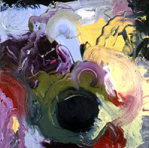
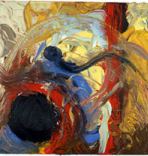
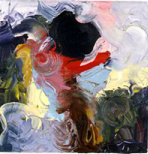
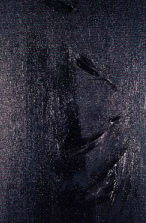
The triptych of paintings, “1917”, are a meditation on the revolutionary political and artistic vision which inspired politicos, poets and painters from the 1890s to the revolution in 1917. “Zaum” refers to a poetic movement which attempted to reduce the Russian language to pure sound. The large black paintings are 6′ x 6″; the sixteen smaller paintings are 18″ x 18″.
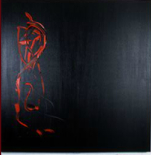
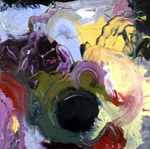
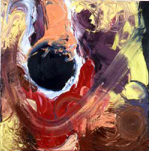
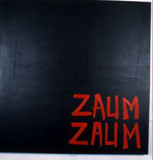
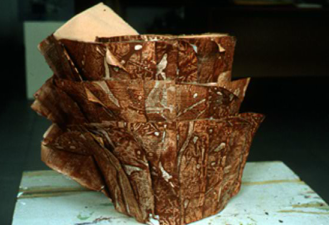
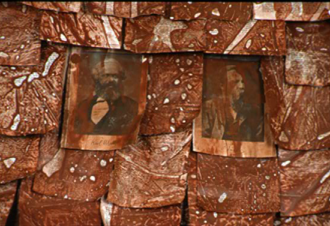
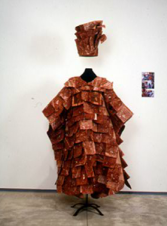
“MarxZauberMantel” is a shamanic cloak and headdress constructed from the dyed book pages of the selected work of Marx and Engels. The cloak was also worn in various performances and exhibited in “Better Worlds” at the Agnes Etherington Art Gallery in Kingston, Ontario. 2002.
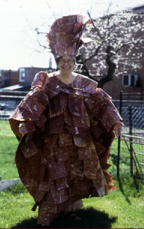
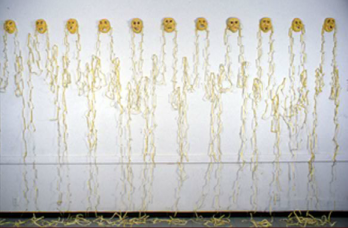
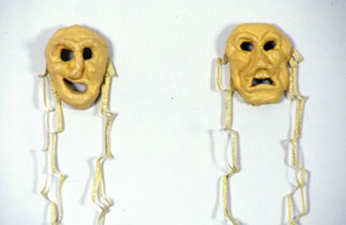
“Two Tears for Communism” is a series of eleven ceramic masks with “hair” made from the dyed yellow book pages of the works of Tim Buck, former leader of the Communist Party of Canada.
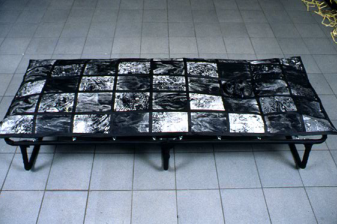
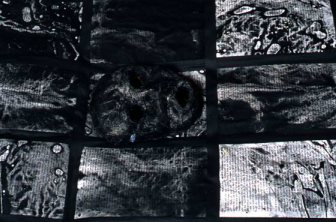
“A Dead Man on Furlough” is an army cot with a mattress covered and stuffed with dyed book pages from the works of Lenin. (Lenin famously said that “a revolutionary is a dead man on furlough”). 6’X3′
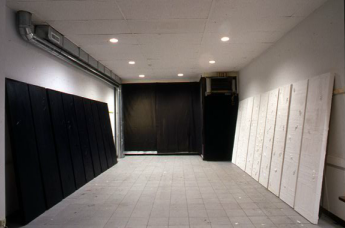
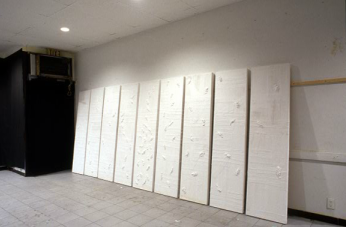
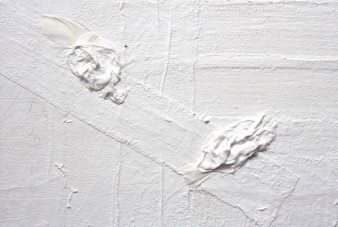
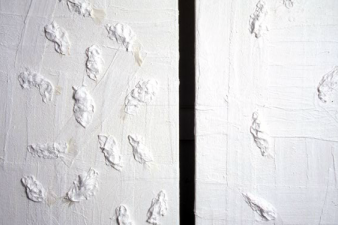
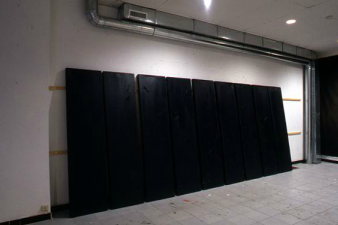
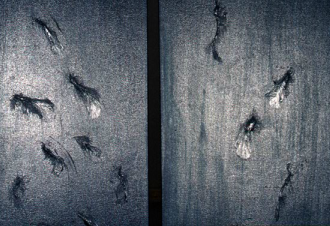
“1918” is a series of 18 canvasses, 9 black and 9 white, which reflect on the aftermath of the revolution – war, famine, the influenza epidemic, and the hardening of the political climate. The black paintings have feathers embedded in the paint; the white paintings are made from plaster of Paris, suggesting the burial of hopes and dreams; wounding and healing. 6′ x 18″.
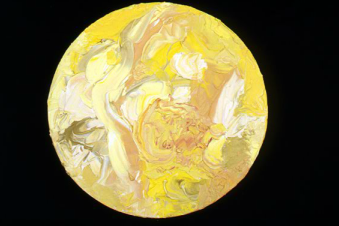
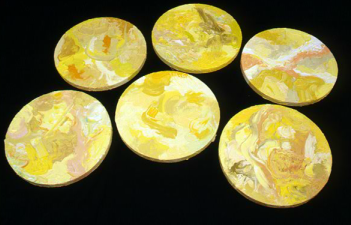
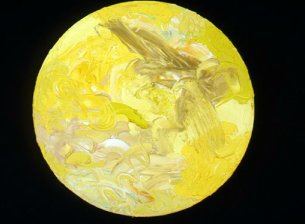
“East” is a series of six round all yellow paintings. They symbolize a rebirth of hope in a spiritual realm, as if the black voids in each of the small paintings from “1917” were transformed into sunlight. 18″ diameter.
Artist's Catalogue Essay
ZAUM ZAUM
"The pessimism of the intellect, the optimism of the will..." Romain Rolland
"History's betrayal is so profound that it cannot be forgiven simply by tacking on a "post'-era to it (post-modernism, post-Marxism). There is real tragedy in the shattering of the dreams of utopia—of social utopia, historical progress, and material plenty for all...[we] would do well to bring the ruins up close and work our way through the rubble in order to rescue the utopian hopes that modernism engendered, because we cannot afford to let them disappear." Susan Buck-Morss, Dreamworld and Catastrophe: The Passing of Mass Utopia in East and West, The MIT Press, 2000, p. 68.
___________________________________________________________
I am often haunted the thought of those students and workers who died in the Russian Revolution. Do they look down on their country and its eighty year litany of famine, epidemics, Stalinist purges, Hitlerian genocide, and the slide into Mafia-driven capitalism that has plunged the majority of its citizens into chaos and penury?
How can their sacrifice be anything but vainglorious, meaningless, ludicrous? Don't they wish they'd stayed home that day, or taken a fast train anywhere?
At the same time, I am compelled by the Russian avant-garde and its role in the revolution. The writers and artists made common cause, and together, in the years leading up to 1917, formed new collectives about every six months, with new names and new manifestos. Poetry and painting were sisters under the skin. Political revolution and spiritual regeneration were seen to be one and the same thing. Outside of native and non-industrial cultures, we haven't seen this state of affairs since. I think it was this congruence of the political and the spiritual that produced such energy and innovation in the painting, poetry and theatre of the day, and in the revolutionary movement itself.
We all know it didn't last. But my intent in the series of paintings and installation pieces called 1917 is to work my way back through the dreadful knowledge of what the revolution wrought, back through the layers of postmodernist irony and cynicism, to find and honour that spark of a desire for a better world expressed equally through art and social change.
Using the dyed book pages of Lenin, Marx, Engels and Tim Buck (former leader of the former Communist Party of Canada), I construct masks, a bed and a shamanic cloak in an effort to re-integrate the political and the spiritual, to shamanize the writings of these political thinkers. The paintings attempt to reach into the heart of that momentous historical era and pull out colour, motion, texture and hope.
One of the configurations of writers and artists, in 1913, to which both Mayakovsky and Malevich belonged, developed a technique for poetry whereby the Russian language was stripped of its referents and reduced to pure sound, analagous to the experiments in pure abstraction made by Malevich. They named this technique Zaum. In resuscitating this obscure word I mean to honour a lost era, and in the face of a necessary pessimism of the intellect, to dare the optimism of the heart.