
To Die For – The Fast Campaign
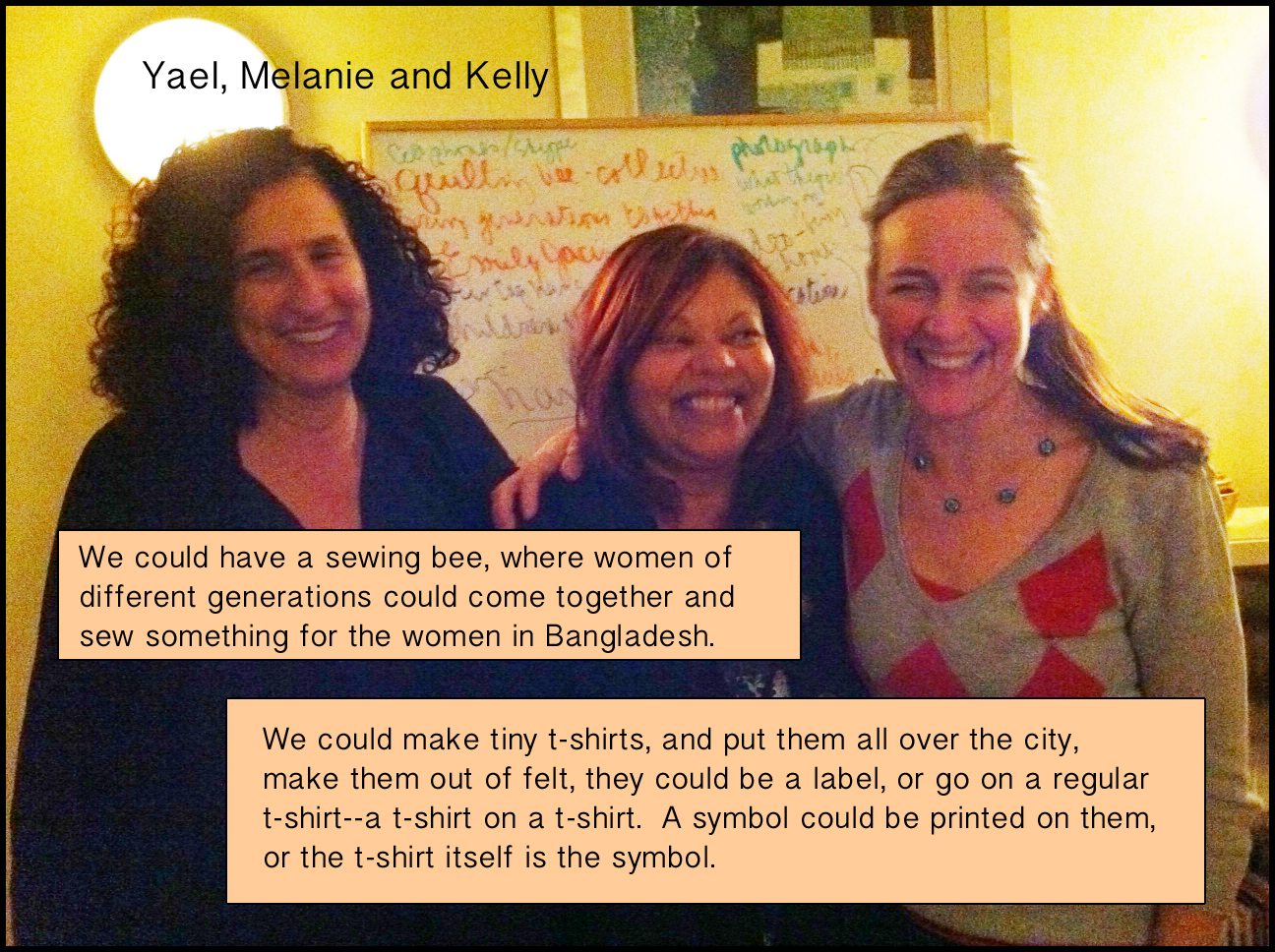
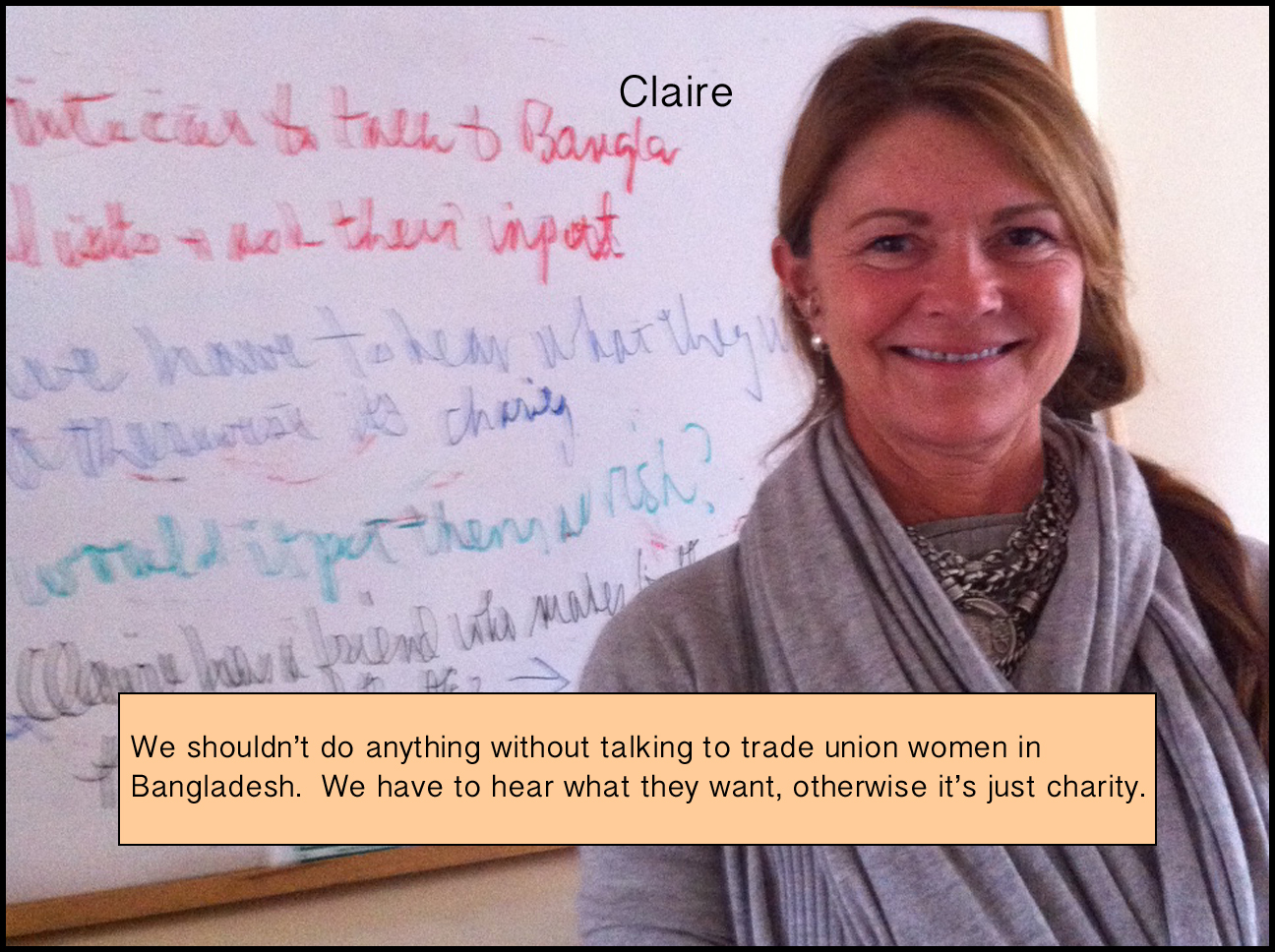
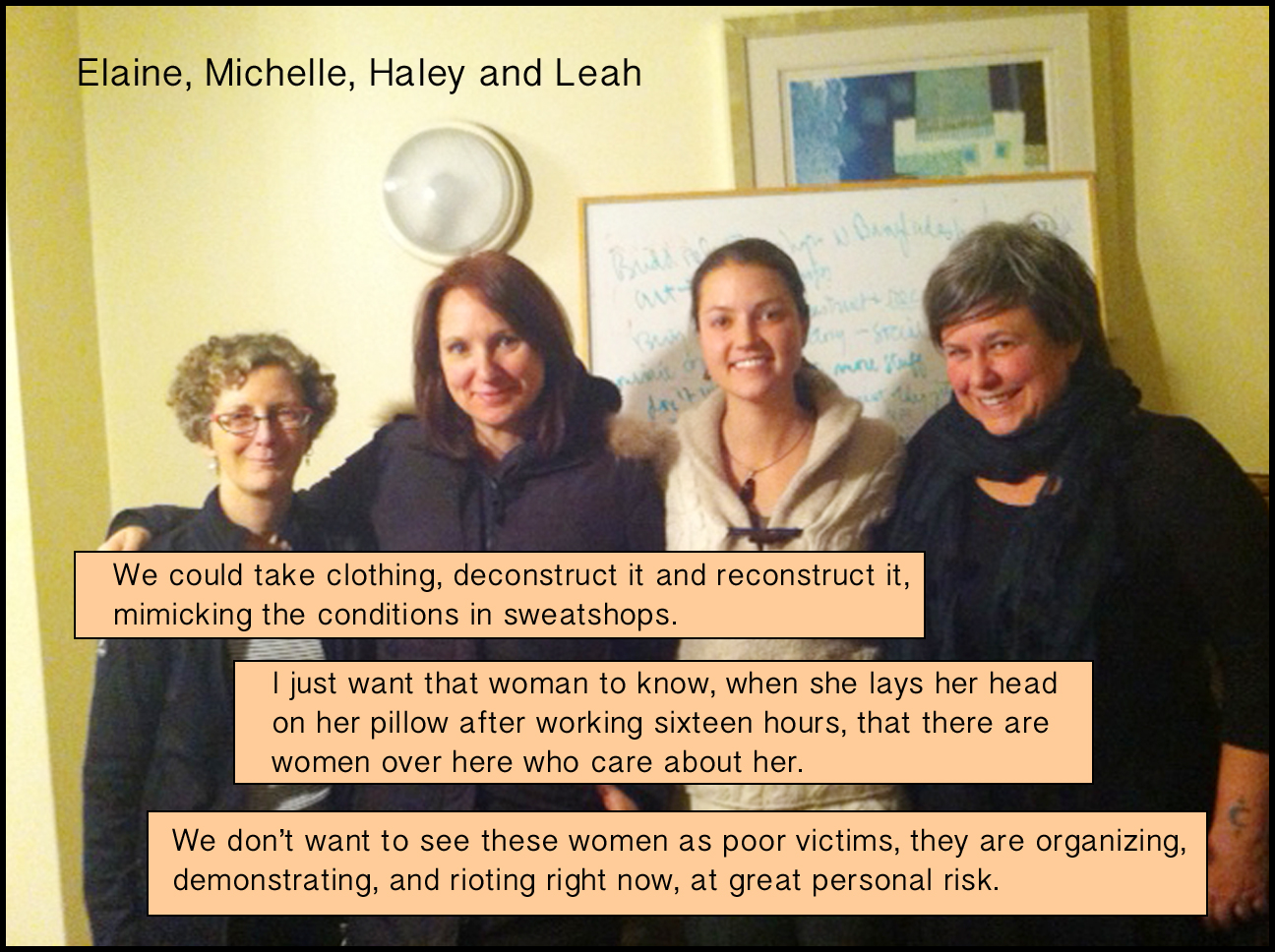
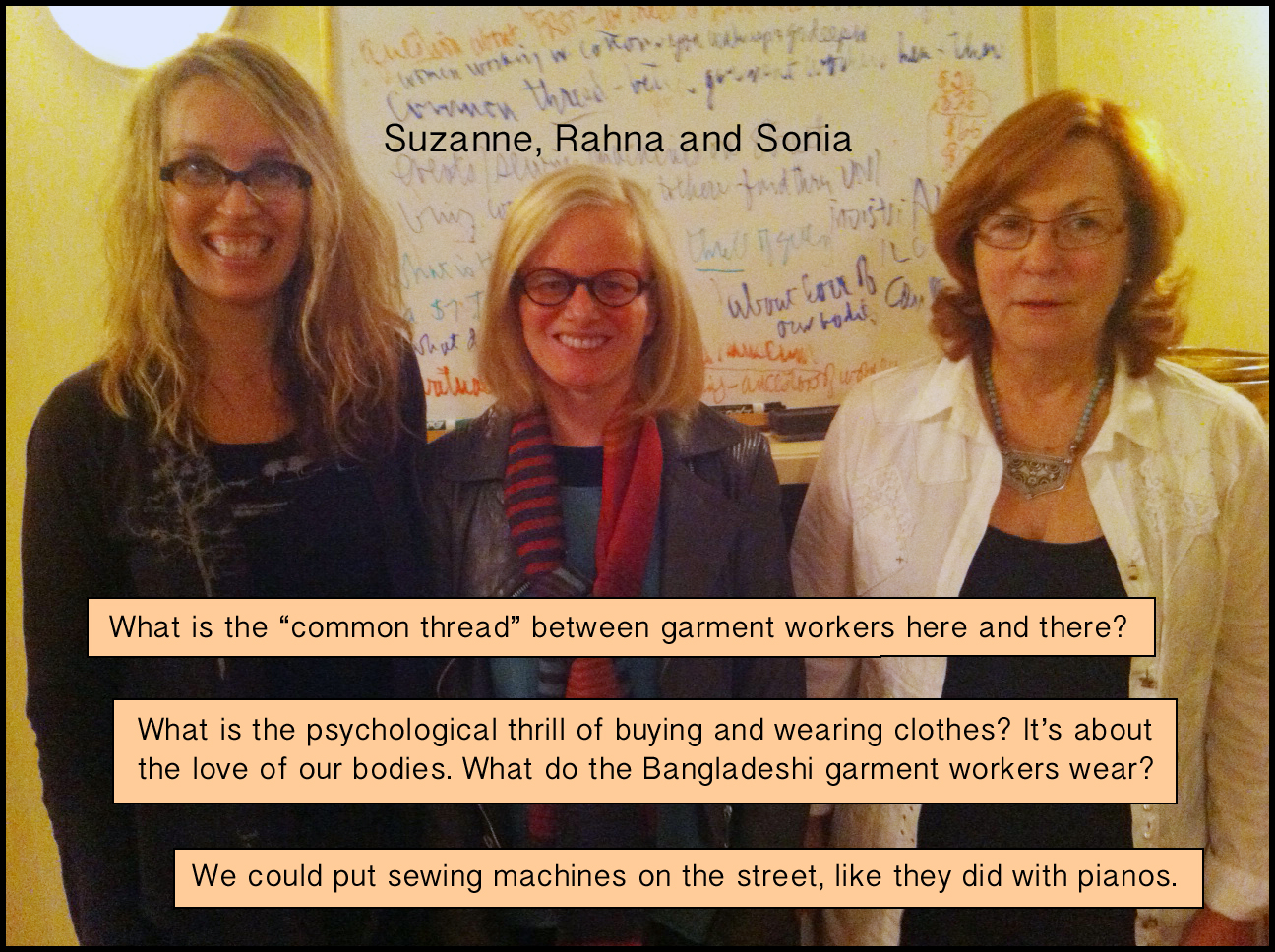
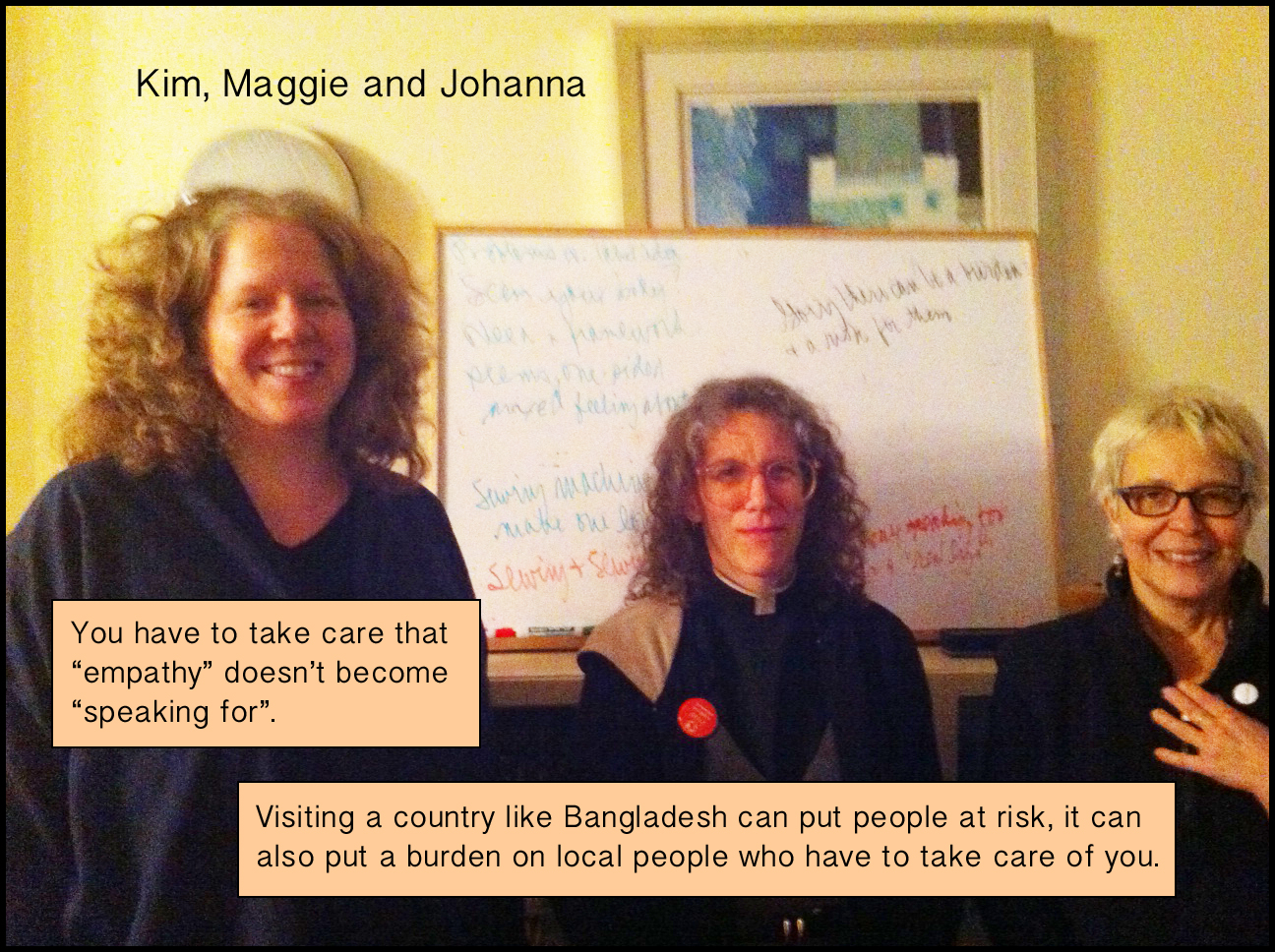
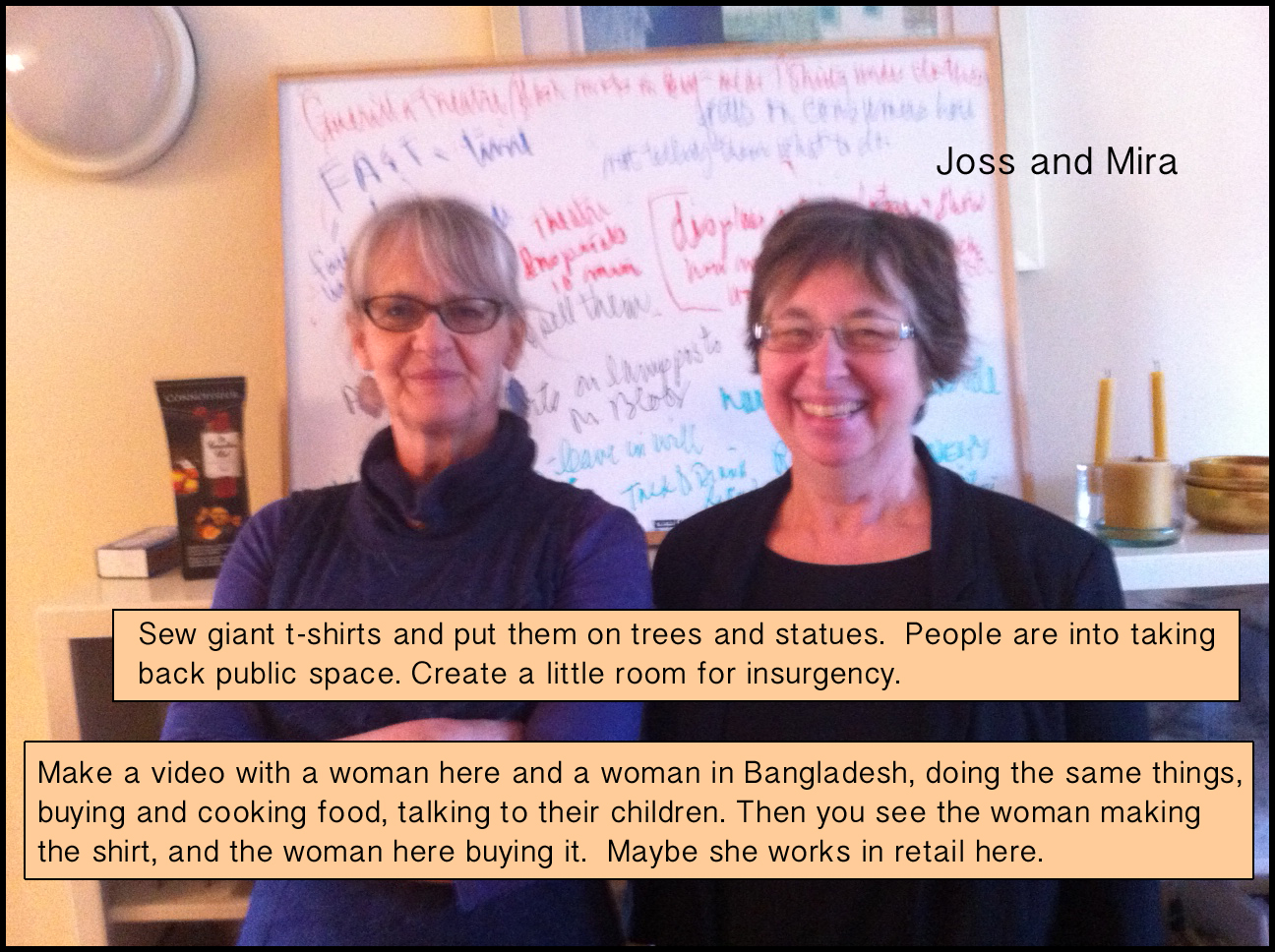
A huge thank you to the 27 women who participated in the research. Here’s what evolved over the course of the lunches and dinners:
FAST: AN ART CAMPAIGN FOR AN ETHICAL CLOTHING LABEL
1. There was a fairly consistent consensus that we would like to be able to buy ethically produced clothing even if that meant an increase in cost, much as the fair trade coffee and chocolate, and organic foods are sold. While waiting for the major retailers to create such a label, we decided to design our own, and to use this label as a campaign to raise awareness, support women in Bangladesh, and ultimately try and persuade retailers to adopt fair labour practices.
The FAST label will be in the shape of a little t-shirt, and will have the word FAST, a website address and a QR code. When the code is scanned by a cell phone, the user will go to a website that includes:
(a) Explanation of the FAST acronym:
F = fair living wage, and the right of unions to organize
A = adult labour only
S = safe working conditions
T = no forced overTime
(b) Photographs of ten women garment workers in Bangladesh who are unionized now, talking about their lives.
(c) Photographs of ten garment workers in Toronto represented by Workers United Union. Recordings (or transcriptions) of them talking about their working conditions, their lives, their relationship to their union.
(d) Updated information about the situation in the Bangladesh garment industry and in the Toronto garment industry.
(e) Links to other relevant sites.
2. The FAST label campaign will be at the heart of a number of art installations and culture jamming events. We want to partner with a major trade union (CUPE, INIFOR or the CLC) and a major art gallery or museum to create a mock sweatshop in the gallery. Visitors will bring their old clothes, deconstruct them and reconstruct them by sewing a giant t-shirt. They will be paid the hourly rate of a garment worker in Bangladesh. The little t-shirt labels will be pinned on the giant tee shirt and the label campaign will be launched in the gallery with the union’s participation.
3. There will also be an installation of sewing machines along Bloor St. near major retailers, where again, giant t-shirts will be sewn and put on statues and trees. The people sewing will be members of Workers United Union, wearing their Union t-shirts. While the sewing is going on volunteers will hand out labels, and more labels will be pinned on the giant t-shirts.
In 2013 I received a research and development grant from the Ontario Arts Council, in partnership with the Maquila Solidarity Network. The purpose of the research was to develop a community art project with women artists, and women in general, in support of garment workers in Bangladesh.
After extensive reading, I decided to make the research itself a community art project, and invited overtwenty-five women to my house for lunch or dinner, and asked them to have a conversation with me about fashion, art, globalization and workers rights. The five Friday dinners and six Wednesday lunches took place in November and early December. The women are artists, academics, politicos, mothers -- and an Anglican priest. At each event I used a whiteboard to give a ten-minute overview of the politics and economics of the garment industry in Bangladesh, and as the conversation started I erased my notes and made notes on the women’s comments and suggestions.